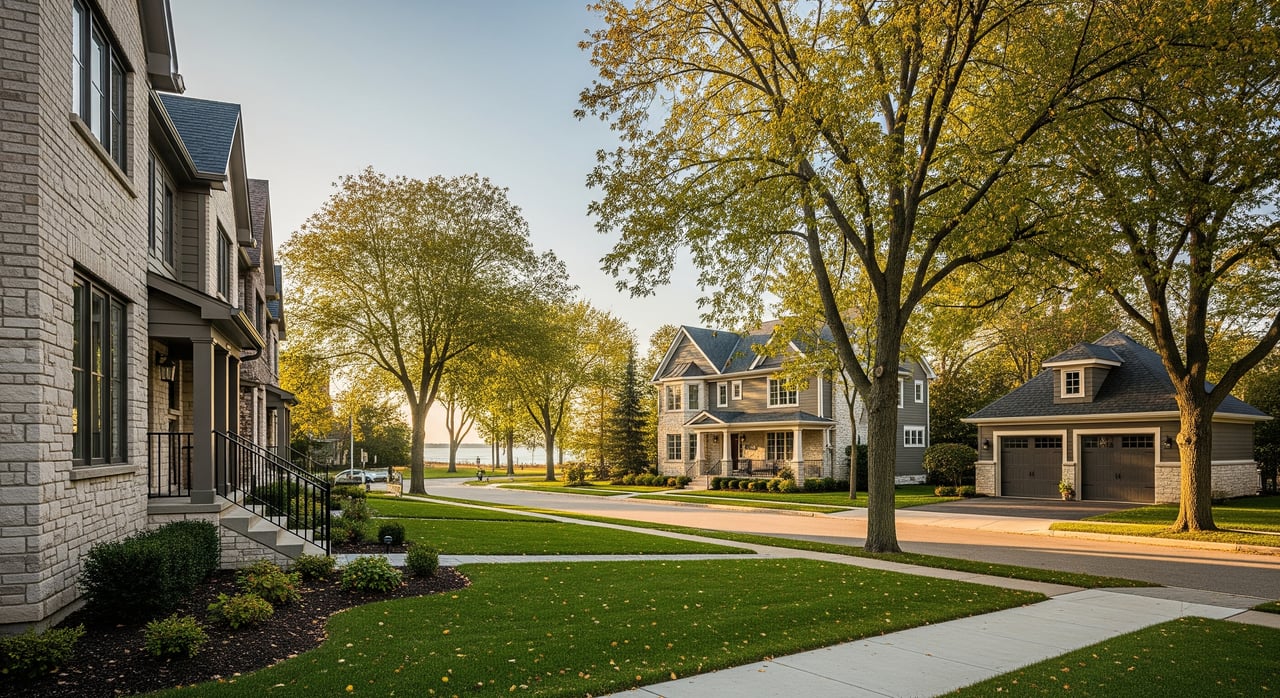
Trying to decide between a townhome or a single-family home in Libertyville? You are not alone. Each option offers real trade-offs in cost, upkeep, privacy, and location perks. In this guide, you’ll learn what to compare, how to verify the numbers locally, and a simple scoring tool to help you choose with confidence. Let’s dive in.
Cost of ownership: key differences
When you compare townhomes and single-family homes, look at the full picture, not just list price.
Purchase price and taxes
- Townhomes often have a lower entry price because of smaller lots and shared structures. Some luxury townhomes can trade near entry-level single-family prices.
- Illinois property taxes are assessed per parcel. In most Libertyville townhome communities, you pay taxes on your unit’s parcel, but some associations handle portions differently. Pull tax history by Property Index Number through Lake County Assessor and Treasurer records to see accurate annual taxes for any address.
HOA fees and what they include
- Townhome HOA fees typically cover exterior items like roofing, siding, common-area maintenance, landscaping, snow removal, and parts of exterior insurance. Some also include utilities like water, sewer, or trash.
- Single-family homes may have low-fee HOAs in planned subdivisions with limited services and amenities.
- Always review the association’s budget, reserve study, and meeting minutes to see what is included and whether fee increases or special assessments are likely.
Insurance basics
- Single-family owners typically carry an HO-3 policy for the structure and liability.
- Townhome owners usually carry an HO-6 policy that covers interior finishes and personal property. The association’s master policy may cover exteriors and common elements. Confirm coverage and the master policy deductible, since unit owners can be responsible for part of a deductible after certain claims.
Utilities and special assessments
- Ask how water, sewer, trash, and common utilities are billed. Some costs flow through the HOA; others are metered to you.
- Check HOA minutes for any pending capital projects and the history of special assessments.
Maintenance and reserves
- A helpful rule of thumb is to budget 1 to 2 percent of a home’s value per year for routine maintenance. For townhomes, you may spend less on exterior items directly, but you still fund them through HOA fees and reserves while handling all interior upkeep.
Maintenance and responsibility
Single-family homes
- You handle the roof, siding, foundation, driveway, yard, fences, and all exterior systems.
- You have more freedom to change the exterior, add structures, or expand, subject to village permits and zoning.
Townhomes
- Responsibilities are split between you and the HOA. Roofs, exterior walls, and common areas are often the association’s job. Interior systems and finishes are typically yours.
- The exact line is spelled out in the declaration and rules. Clarify any gray areas before you commit.
Typical cost drivers to plan for
- Roof replacement cycles, siding and paint, HVAC, water heater, windows, driveway sealing, pest control, landscaping, and snow removal.
- Older homes near downtown may have higher near-term costs and specialized permit needs; newer developments reduce near-term replacements but still require routine upkeep.
Privacy, space, and lifestyle
Yard and outdoor space
- Single-family homes usually provide private yards for gardening, playsets, or expansions.
- Townhomes tend to offer smaller patios, balconies, or limited green space, with shared common areas maintained by the HOA.
Noise and attached walls
- Townhomes share walls, floors, or ceilings. Soundproofing varies by construction and age. Ask about assemblies and any history of noise complaints.
Flexibility to remodel
- Single-family homes offer more freedom to modify interiors and exteriors, within village zoning and permits.
- Townhome exterior changes usually need HOA approval. Interior changes may also have rules, especially for plumbing or structural work.
Libertyville location factors
Downtown and Metra access
- Libertyville’s Metra station on the Milwaukee District North Line is a major draw for commuters. Townhomes near downtown or the station trade on walkability and transit convenience. Decide how much that walk-time savings is worth to you.
Parks and recreation
- Look for proximity to community parks and trails such as Cook Park and Adler Park. Townhomes may rely more on shared outdoor areas, while single-family homes offer private yards plus neighborhood park access.
Schools and village services
- School district boundaries and village services influence value and carrying costs. Confirm whether streets, alleys, and snow removal are village-managed or HOA-managed for your specific property.
HOA trade-offs to review
Documents to request
- Declaration/CC&Rs, bylaws, rules, current budget, latest reserve study, meeting minutes for the past 12–24 months, insurance declarations for the master policy, litigation disclosures, and special assessment history.
Financial health clues
- Adequate reserves with a recent study and a clear plan for roofing and paving are positive signs.
- Low reserves combined with visible deferred maintenance can point to near-term special assessments.
Rules that affect daily life
- Review pet policies, parking, rental restrictions, and architectural controls. Understand how fees have changed over the past few years and how the board is managed.
Local product types you’ll see
- Commute-focused townhomes near downtown and the Metra: smaller footprints, lower exterior maintenance, HOA-managed snow and landscaping, strong for buyers who value walkability and transit.
- Family-oriented detached homes in mid-century subdivisions: larger lots and yards, more maintenance inside and out, a good fit if you want private outdoor space.
- Newer planned single-family developments: modern systems and finishes, sometimes with a low-fee HOA for common areas, higher price per square foot for newer construction.
Use this decision matrix
Score properties against your priorities. Rate each criterion from 1 to 5, multiply by the weight, and total your score.
- Total monthly cost (mortgage, taxes, insurance, HOA) — weight 20
- Maintenance burden (time and cost) — weight 15
- Privacy and noise — weight 15
- Outdoor space — weight 15
- Location convenience (walkability, Metra) — weight 15
- Future resale/liquidity — weight 10
- Restrictions (HOA rules) — weight 10
Interpretation:
- 400–500: Strong fit
- 300–399: Good fit with trade-offs to consider
- 200–299: Only if you prioritize specific features
- Under 200: Likely a mismatch
Total cost worksheet
Use these fields to estimate and compare apples to apples:
- Purchase price
- Mortgage assumptions (rate, term, down payment)
- Annual property taxes
- Monthly HOA fees (if any) and what they include
- Homeowners insurance (HO-3 for single-family; HO-6 for townhome) and master policy responsibilities
- Utilities (estimate monthly)
- Annual maintenance reserve (use the 1 to 2 percent guideline)
- Expected one-time costs in first 5 years (roof, HVAC, driveway)
- Special assessment risk from HOA docs
- Net monthly cash flow: mortgage + taxes/insurance + HOA + utilities + maintenance reserve
Verify the numbers locally
- Pull recent comps in Libertyville separately for townhomes and single-family homes using MLS data for the last 6–12 months.
- Check parcel-level tax history through Lake County Assessor and Treasurer records and confirm exemptions.
- Review Village of Libertyville zoning and permit requirements if you plan to remodel or add structures.
- Confirm commute times with Metra schedules and typical rush-hour drives to your key destinations.
- Contact a local insurance agent for HO-3 and HO-6 quotes that reflect the HOA’s master policy and deductible.
Smart questions to ask on tours
- What does the master insurance policy cover, and what is the deductible?
- Are utilities separately metered or included in HOA fees?
- What is the current reserve balance and date of the last reserve study?
- Any pending or recent special assessments or major repair projects?
- How are walls and floors constructed for sound? Any recorded noise issues?
- How is parking assigned, and what are guest parking and street rules?
- What are rental rules and minimum lease terms?
- Can the seller share recent utility bills and maintenance records?
Next steps
- Tour at least three townhomes and three single-family homes and score each with the decision matrix.
- Request the HOA packet early and review it with your attorney or experienced agent.
- Verify tax histories and ask for copies of recent tax bills and exemptions.
- Order inspections and obtain contractor bids for foreseeable capital items before waiving contingencies.
- Get insurance quotes tailored to each property type and HOA policy.
If you want a clear, side-by-side comparison tailored to your budget and lifestyle, we can help you run the numbers, review HOA documents, and spot design or remodel opportunities that fit your goals. Reach out to Ivonne Payes to get started.
FAQs
What costs should I compare for Libertyville townhomes vs single-family homes?
- Compare purchase price, annual taxes, HOA dues and inclusions, insurance type and premiums, utilities, routine maintenance (budget 1–2 percent of value), and any near-term capital items.
How do HOA fees impact my monthly budget in a townhome?
- HOA fees often shift exterior costs into a predictable monthly line item and can include snow removal, landscaping, exterior insurance, and some utilities; review the budget and reserve study to gauge fee stability.
Are property taxes lower on townhomes in Libertyville?
- Not automatically; taxes are parcel-specific. Check the property’s tax history through Lake County records and account for exemptions to estimate your true annual bill.
What insurance will I need for each property type?
- Single-family homes typically require an HO-3 policy for the structure and liability, while townhomes usually use an HO-6 policy for interior finishes and personal property in tandem with the HOA master policy.
Which offers better privacy: a townhome or a single-family home?
- Single-family homes usually offer more privacy and a private yard; townhomes share walls and common areas, so ask about construction details and noise history when touring.
How do I evaluate the health of a townhome HOA in Libertyville?
- Review the reserve study and balance, budget, meeting minutes, master insurance policy and deductible, fee increase history, special assessment record, and rules that may affect your daily life.